Sunday, August 3, 2014

Menstruation Complication


Almost nobody like getting their period. I say "almost" because some people use it to make sure they're not pregnant (probably not the best idea, but better than nothing) and some wish they'd just get it already and mature into womanhood. Either way, it still sucks because it's all messy and crampy. Luckily, we've got pads, tampons, cups, and other disposables that make it easier to deal with that time of the month. But what if we didn't have all of this new-fangled stuff? What did women in the past do to help with this monthly problem? Here are a few examples of what women used before the invention of the tampon, as well as some useful tips and sites for all of your period needs. As your pretend doctor and chocolate-enthusiast, I recommend you to eat chocolate and other goodies during your time, even if it's not highly suggested by those "actual doctors".

Bloating: There are times during your period where you can’t get into your own pants. You probably think that it’s because you've gained weight, and technically you’re right. However, it’s not necessarily fat. It’s usually just water weight that you put on during your period. You’ll also feel bloated, like you’ve eaten too much. This is caused by a number of things such as hormone level fluctuation, water retention, or a little weight because of hunger pangs and cravings.

To combat bloating, consider:
- Working out (keeps your weight under control & decreases constipation)
- Lay off salty foods (salt retains water and dehydrates you)
- Try not to use artificial sweeteners (causes diarrhea and gas, adds to your bloating)

If you’re feeling constantly bloated for a few weeks, feel full when you’re eating, or have changes in your urination/defecation, please see a doctor to make sure you’re healthy. These can be signs of potential ovarian cancer or other diseases

Heavy bleeding & clotting: Generally associated with hormone levels, heavy bleeding and clotting happen to most women during their period. Some experience it more than others. Depending on your levels of stress and even your birth control, you may find that you bleed more than usual. Clotting is normal for most people, but if you find that you're clotting more frequently and your period is heavier, go see your doctor. This also goes for bleeding between periods and after sex. There's also a link below that with info for dealing with heavy bleeding.

Fatigue: During this time, you'll feel tired and unmotivated. Though it's natural, it isn't always fun. Getting proper nutrients, eating food that are high in iron and vitamins B and C, exercising, and talking with your doctor are some good ways of dealing with fatigue. If you're period is heavy and your fatigue unbearable, speak with your doctor or gynecologist and alert them of any medication you're taking, even if they're non-subscription.

Smell: If you find that your nethers start producing an odor during your period, you should consider switching the products you use or increasing them. Menstrual blood only smells when it comes in contact with open air. Ideally, if you're using the right product for the job, you shouldn't find an odor. Consider changing your pads/tampons/cup frequently if you're concerned.

Blood color: Though blood is typically red and that's what you'd expect during your period, your menstrual blood can come in colors ranging from red to dark brown or black. You may start with red blood, then during the end of your period it will be a muddy brown or black. The darker colors are a sign that your period is at its end because the older blood is being expelled, but it didn't come out at quickly as the blood in the beginning.

Missed period: A missed period is usually a sign of pregnancy, however it can also be a sign of your hormones levels changing. High levels of stress and anxiety affect your period because it's a negative affect on your hypothalamus (the section of your brain that controls the regulation of hormones). If you're under lots of pressure, you're likely to have your period later than usual. Other reasons for a missed/late period are anorexia or bulimia, sudden weight loss or being underweight, irregular sleeping and eating patterns, too much exercise, or a medical condition. If you can, take a pregnancy test before your period to be sure and see your doctor if you have concerns about your period.

Cramping: Depending on the severity of the cramps, there are some exercises and tricks to relieve them.
Doing some light exercises and stretches can help with the puffy feelings and un-cramp the tightened areas. Generally lying on your back and taking deep breaths will help, or you can rub the cramped area and placing a heating pad on it. Ibuprofen is helpful as well. Some other options for those who prefer a herbal alternative are different teas containing ginger, chamomile, and red raspberry leaves. These herbs have healing properties that aid in stomach discomfort and cramping. Other foods to consider area whole grains, raw dairy or limiting your dairy intake, limiting your meat and egg intake (high in the inflammant, arachidonic acid), and eating more fruits and veggies.

Courtesy Ziblie.tumblr.com


Betcha didn't know...
  • Egyptian women used softened papyrus, Roman women used animal skins, African women used rolls of dried grass, and other women around the world used wool.
  • Women in the 20th century would use rags to stop the flow (not much of a problem during that age because women had a lot less to eat and tended to have more children). Hence the term “on the rag”.
  • Also in the 20th century, disposable pads were made to be pinned into women’s underwear. Later, a belt was made to hold the pad into place. They were apparently very uncomfortable, making you hate everyone during your period  more than usual. I asked my mom, given her first-hand experience.
  • Women in the 1800’s didn't use anything, but wore black underwear to hide the stains. 
  • Eventually, women used sponges to prevent bleeding. They were also used as a form of contraception and douches (that’s also in this blog). 
  • Menstrual cups were invented in 1937 to collect…well, you know. It lost popularity due to it the mess that came with it, but eventually made a comeback in the 90’s and is still used today.


  • Tampons started in the 30’s, but only began adding women in their ads in the 50’s and 60’s. These tampons also came in boxes of “tampon panties” which were worn in addition to tampons to prevent further leaks. It looked like they started in the 60’s and they only cost $1.00!

    Reusable pads
  • In the late 1960’s, pads with adhesive strips were invented to replace the belt/pinning methods. This idea was amazing and revolutionary, and it’s still the way pads are created today. A word of caution: don’t get the adhesive near your pubic hairs. You will cry. 
  • Today we have multiple varieties of menstrual products, including reusable pads!
Diva Cup holders

Links


Interesting Information of the Week (this is a new thing)!
There are websites that talk about how marijuana aids in coping with period pains, specifically how and which types of cannabis to use. I found this site that had a simple yet informative article on this topic.
http://www.theweedblog.com/top-five-marijuana-strains-for-pms/


Wednesday, July 16, 2014

All about the Vajay

The vaj, sugarbox, pussy, Mrs. Fubb's parlor...whatever you tend to call the entirety of the vagina.

Folks, did you know that there are technically 2 holes in the vagina? Crazy, right?! I was unaware, myself.
This is why we should look more closely at one of the most talked about part of the body: the vagina.

[Imagine I've got a laser pointer and I'm wearing a lab coat. It's cooler that way].

I'll be going through each part of this and giving a brief explanation of what it does.


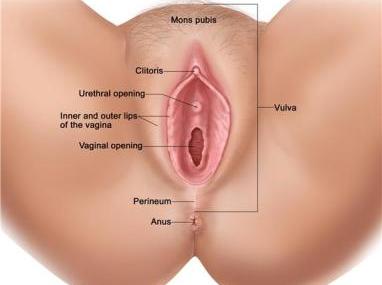
Clitoris: The love nubbin! I just made that up...
This little mound of flesh is generally a highly sensitive area for most women. It's the only part of the vagina that is only for sexual stimulation. When aroused, the clitoris fills with blood and swells. After orgasm, the clitoris is surrounded by the tissues of the clitoral hood and eventually reduces in size. Most prefer having this area licked rather than rubbed or touched. No, vibrators won't desensitize your clitoris but they will make it more difficult for you to reach climax naturally.

Urethral opening: This is what tripped me up about the vagina. See, I didn't get a lot of sex ed in school, so I didn't know that this was a separate thing. Connected directly to the bladder, the urethral opening is where urine comes out of when you pee. Simple as that. As far as I know, there isn't a lot of sexual interest with this area unless you're into golden showers.

Outer and inner lips (the labia): These are the folds of skin protect the clitoris, urethra, and vaginal opening as well as provide some sexual arousal during sex. The part of skin right above the clitoris is called the clitoral hood, and the webbed skin under the vaginal entrance is called the fourchette.

Vaginal opening, uterus, and fallopian tubes: As most already know, the vaginal opening is the area where one may put themselves/objects in during sex. It's also where babies come out of during childbirth, so it's able to stretch to amazing sizes.

The uterus is the muscular organ where the embryo and fetus are taken care of and where they grow, it's also where IUDs are placed to block off spermies from gettin to the fallopian tubes. Lots of folks think that babies are really from someone's tummy, but it's actually much farther down, and the belly button has nothing to do with it.

The fallopian tubes connect the uterus to the ovaries, the egg cells responsible for making babies. These tubes and the egg are the primary destination for spermies to get to, and where the eggs move down during menstruation/periods.

Hymen: Even though it isn't shown in either of these images, the hymen is another part that is temporary. It's also what a majority of people consider to be the difference between a virgin and someone who has had sex, and has many places as far as cultural significance.

Prior to having penetrative sex, the hymen is usually a half moon-shaped thin membrane that allows menstruation flow. During sex, the hymen breaks due to the penetration. Sometimes with enough lubrication and relaxation, people can have sex without the hymen breaking. But it's not only sex that breaks a hymen. One can break their hymen from using a tampon, riding a bike, and experimenting with sex toys.

There are also multiple kinds of hymens such as imperforate hymens, one that covers the entire vaginal opening with the exception of one small hole that allows some menstrual blood to flow through. For more, follow the Young Women's Health link below!

Vulva: The vulva is usually what people mean when they think of vaginas, in my opinion. It's the external genitalia where the pubic hair is and where one can see the labia majora/outer lips. When turned on, this area swells and may become wet, depending on the person. 


And please check out this wonderful video from Mental Floss on misconceptions about sex. It's fun and educational, like this blog! Right?...right?


Here's me in a lab coat! Thanks for reading, peoples!


*edited 8/30/14* Here's a SciShow video that talks about the clitoris!
https://www.youtube.com/watch?v=3B5jz1PMoNo

Thursday, June 12, 2014

Sort-Of Sex? Dry Humping & Non-Penetrative Relations

So you're interested in sex, but worried about getting pregnant or getting someone else pregnant or maybe you are inexperienced and feeling awkward. ...what do you do?

Good news! There's always dry humping and other forms of non-penetrative sex. 

This is especially useful when you're a teen and you're either not allowed to have sex (hey, it happens), you're nervous about getting caught, or you're just anxious. 

Ms. Luka! I've got questions! What is dry humping and can you actually have sex without having sex?

Great questions, adorable and imaginary student! Let's get started.

Dry humping is act of touching and rubbing up on one another with clothes on and without penetration. Groping, kissing/making out, love bites, etc. These are all forms of sexual acts without having sex. Dry humping will not get anyone pregnant because there's no actual penetration involved. Should a male partner ejaculate in his pants during dry humping and it happens to rub against your nethers, be not afraid! Unless he just let go a gallon of semen and he's right up in there, then you should be just fine.

Just because there's dry humping and non-penetrative sex doesn't mean that you can't touch each other and get a little hot and heavy. Here are some ways of having some fun without getting too serious:

Rubbing/Scissoring - These are the acts of rubbing penises together (penis cuddles!) or swordplaying, and rubbing vaginas together (vajay cuddles!).

Mutual masturbation - If you know what masturbation is, you'll get an idea of what mutual masturbation is. Sexually stimulating your partner while they also stimulate you is mutual masturbation. This includes fingering, hand jobs, anal play, etc. 

Breast stimulation - Playing with the breasts and nipples can be fun. Jumbling them around, experiment with boob jobs, or even sweet kisses and bites can be sexy and creative.

Oral sex - If you've read at least some of this blog, we've mentioned oral sex. Going down on your partner doesn't always have to lead to sexual intercourse and it helps relieve tension. It also means you can try some fun tongue tricks and play with food, too!

If you had friends like I did in high school, they'll likely pretend to do these things on a daily basis in the halls or in the classroom before classes start. Nothing serious, just good ol' fashioned rubbing. Well, that's how it was with most of the guys. The gals weren't always quite that silly. 


Please leave any comments if you have questions or would like me to add stuff to my blogs. Also, for the first time ever, you can follow me on Twitter! I'd love to hear from you. I just made a Twitter account after much procrastination and angst. Here's the link if you're interested!

https://twitter.com/Luka_Thalius

<3 Luka


Sunday, June 1, 2014

Update!

Brief update here! I finished college for this semester, but I got more hours because some folks I work with had things to do. I've also been a little lazy, and I got new art software, and I'm working on a gaming channel for Youtube.

So yeah, sorry guys. I'm looking for more material for the bloggings, but I'll come up with something if nobody helps out :P

I might write about the mysterious G-Spot on the ladies, or male masturbation, or something like that. Touch yourself, just go for it! :D

See you soon!
Luka

Sunday, May 4, 2014

Get Your Geek On! - Convention Safety

Dude, conventions are fun! Especially the ones geeks and gamers have. But there are people at cons who are looking to have too much fun, and there might even be people who could make others feel uncomfortable. How do we deal with that? Also, how do we deal with sexuality at cons? Here's some basic information on convention policies and how to be safe.

My partner and I went to PAX East last weekend and we had a blast! I felt very blessed to be completely comfortable (emotionally. Physically, it was a 20,000 people sauna of sweat and testosterone in there) in my surroundings. Sexually, my partner and I weren't doing anything because we were being respectful of his family which we were sharing a room with. You just don't do that to family...

I looked online at some policies because I wanted to know what would happen if someone felt unsafe at a convention. Here are a few examples:

PAX East

"If at any point you feel unsafe at PAX or that any of the rules have been broken, we ask that you inform an Enforcer or member of PAX staff immediately. Your safety is our primary concern, and if you feel that safety has been compromised, we will do everything in our power to rectify the issue. Issues of violence and harassment are addressed immediately, with guarded “Safe Areas” being designated in case any incidents do arise."

"Any form of harassment, whether that’s based on gender, race, sexual orientation, disability, physical appearance, or religion, will not be tolerated at PAX. If you are caught or reported to have harassed anyone at PAX, you will go through our reporting process and face remediation steps."


"PAX has a strict ‘no booth babe’ policy with the purpose of creating an environment where everyone can feel comfortable and welcome, and the focus is on games, not hired booth staff. Booth babes are defined as staff of ANY gender used by exhibitors to promote their products at PAX by using overtly sexual or suggestive methods. Partial nudity, the aggressive display of cleavage and the navel, and shorts/skirts higher than 4” above the knee are not allowed. If for any reason an exhibit and/or its contents are deemed objectionable to PAX management, the exhibitor will be asked to alter the attire of its staff."http://east.paxsite.com/safety-and-security

San Diego Comic Con
"Attendees must respect common sense rules for public behavior, personal interaction, common courtesy, and respect for private property. Harassing or offensive behavior will not be tolerated. Comic-Con reserves the right to revoke, without refund, the membership and badge of any attendee not in compliance with this policy. Persons finding themselves in a situation where they feel their safety is at risk or who become aware of an attendee not in compliance with this policy should immediately locate a member of security, or a staff member, so that the matter can be handled in an expeditious manner."
http://www.comic-con.org/cci/convention-policies

Anime Boston
Unsolicited physical contact is part of their prohibited contact policy and will be dealt with according to their "Reprecussions and Violations" policies depending on the severity of the action.
(There wasn't much on this topic, so I didn't add the link because I didn't have any legit blurbs)


With these in mind, how could one keep themselves safe at a convention sexually and personally?

I went to a panel on gender inequality in video gaming where one of the panelists mentioned that a cosplayer for her video game was approached by an attendee and he asked if he could grab her ass because he liked her costume. I would say this is a huge no! But it brings me to my first topic:

1. Be Aware of Your Surroundings and Your Cosplay
If you're feeling uncomfortable right off the bat with your cosplay and others making gestures or comments towards you, I think it's time to change. I suggest bringing a small bag with extra clothes in it so you can change at any time. Likewise, be aware that your cosplay may entice others to make passes at you, grab you, make comments, etc.

Personally, I wish I had thought about this. I dressed up as Kaylee from Firefly and my coveralls were too tight. Wedgies galore...

2. No Means No
If someone asks an inappropriate question, make sure they know the answer if you're not into that. Some folks think that when they're in cosplay that they are that character. I know a few people who dressed up as characters from Hetalia and they're engaged. One of them was groped by another Hetalia cosplayer because those characters are often shipped together. Also, please ask others if you can have hugs and get pictures taken.

My partner and I got to meet our favorite Youtuber, Markiplier. One question that I was asked by a friend was "DID YOU TOUCH HIS BUTT?!" My first reaction was no, but I should have. Realistically, I probably would have asked to touch considering he might have said yes and grabbing might freak him out or something. I want to be polite, not get kicked out of PAX.

3. Consider a Group


By that, I mean tag along with a group of people! If you're 18 and younger, it's a good idea to go with friends or family. At least there's someone there to help if you feel unsafe. If you're 18+, still consider traveling with a group in case there's a problem. Make sure to get contact information so you could meet up if someone is lost.

4. Know Your Exits, Ride, and Stay-Over Location
Be sure you know where your convention location is and to arrive on time to get inside and without trouble. You never know, these things happen. Also, give yourself enough time to get your things together. You're going to want a water bottle or another water-storage device, a pen for autographs and stuff, money for merchandise and prostitutes (not really), protection in case there will be some sexy times (you never know), and food.
You should know where your ride will be (if you're getting driven by a friend, walking, taking a bus, etc), and how you're getting to where you're staying for the night.

5. Consult Security
Please feel free to talk to security if there are any safety concerns you have during your time. They're pretty friendly folks and I'm sure they wouldn't mind to help.


This was just a brief overview of what you should do for a convention. I hope it helped! I'll be posting more in the near future during summer vacation :)

Sunday, April 6, 2014

Trans* Health (I don't have anything witty for this)

I've got a lot of friends and loved ones who identify as trans* and I think it's important to include how to be healthy as a trans* individual. Note that I am not trans* identified (more gender non-conforming), I am an ally who wants to help give others info. If you would like for me to add more about this topic, please indicate in the comments below!


Let's begin with the terminology: trans*
I use the asterisk because I believe that trans doesn't always mean transgender, it's a transitioning point for people who don't agree with their gender assigned at birth, and it's an ever-changing point for some. It could mean that this person uses gender non-conforming pronouns, or the pronouns of their opposite gender (i.e. if they were born female, they may choose to use male pronouns), they could wear the clothing that makes them feel like themselves and identify as trans*, they could prefer to be called a transsexual, or they could be someone who says they identify as (insert pronoun here), and they have a trans history. Because I couldn't possibly know everyone's story, I use an asterisk. It's sort of a "DIY Fill in the Blank". Onward!

If you want more information, then follow this link:

Yes, I went there. Now seriously, follow this link -

As one might imagine, there are multiple health concerns that trans* folks deal with during their transition. Mental, physical, emotional, spiritual, etc. The biggest thing to do is to respect that person's preferred gender pronouns and not to ask about their previous identity (who they were born as), as that can be offensive. I'm sure those of you who identify as cisgender (a fancy word that means you use the gender pronouns that match with your identity at birth. Ex: Male at birth = he, him, his) that you have questions and curiosities, which would be normal, I think. However, I'd suggest going to an official website for that information as to how transitioning works or visit a Trans* convention or conference that offers workshops for you to attend.

I myself have been to the Transcending Boundaries conference in Mass that has offered lots of amazing workshops and panels, and I got to meet Kate Bornstein! I'd suggest looking up the nearest GLBTQ or Trans* conference in your area and checking it out.

There are problems concerning trans* people and HIV which still exist. The sex hormones needed for transition (estrogen and testosterone) can be taken via pill, skin patch, and injection. The injection part is what is the concern as far as HIV is considered. If one doesn't use clean needles, HIV can easily be contracted. Reuse of needles also pose health concerns, but we'll get to that in another post.

Some issues that occur during transition include:
Fears of finding a partner
Family and friend relationships
Work relationships
Violence and prejudice
Experiencing surgeries and changes
Changing legal documents.

After transition:
Varying levels of satisfaction with appearance and surgeries
Unaddressed emotional issues
Disappointment.

Overall concerns:
Finding health professionals that will be understanding
People not using preferred pronouns
Suicidal thoughts
Depression & anxiety

As far as physical health, I could not find very many things that were up-to-date and accurate for trans* individuals. I did find a link on what to talk about with your health care provider as a trans* person. Here it is, as well as some information from Fenway Health on Trans* Awareness Week.

http://www.glma.org/index.cfm?fuseaction=Page.viewPage&pageID=692

http://fenwayfocus.org/2013/11/transwk-transgender-awareness-week-2013/


Sorry, folks. When I find more information, this will be updated! Please, please feel free to add comments below if there are any mistakes or if there's something I missed. Take care!

- Luka T.


Friday, March 28, 2014

I'll be Watching You: Stalking, Harassment, and General Discomfort pt. 1

This might be a 2-part segment...


A friend of mine was recently harassed by a person who works in the same store as her. They usually don't work together, but they occasionally see each other and joke around. Sometimes it's play-flirting, and it's with more than just this guy. Everyone was under the assumption that it was just fun, nothing serious (as she has a partner, who is also another friend of mine). I won't get into details since I was confided in and I think that's pretty rude, but the actions this man made were definitely uncalled for and violating of her trust, let alone her acquaintanceship.
 
What would you do in this situation?

Personally, if he had done this to me, I would have removed myself from the area and made it clear that he would never speak to me or come near me again. Maybe that's harsh, but it's better than getting hurt in the future. I would follow it up by talking to management about it, just to let them know that this was serious and they need to be aware that it could also happen to someone else. 


So, what's harassment?
Harassment is an umbrella term of all different behaviors that are considered offensive in nature. It could be used to scare, upset, or disturb the victim and may also be repetitive. Sexual harassment is an unwanted sexual advance that usually happens in the workplace.

What happened to my friend was sexual harassment, even though I won't tell you what the man did. My boss at work has sexually harassed people before, too. See my other blog for details.

How do the victims feel?
In my friend's case, she felt that she was responsible and didn't want the man to get in trouble or fired because he "needed his job". This isn't uncommon, of course. Guilt is one of many responses to sexual harassment. Others include:
  • Anxiety 
  • Depression, 
  • Shame, 
  • Frustration, 
  • Loss of confidence/self-esteem, 
  • Isolation, 
  • Feeling powerless, 
  • Being objectified, 
  • Changing lifestyle, 
  • Serious amounts of stress, 
  • Feeling/being scrutinized and judged, 
  • Sometimes retaliation from the harasser.

How can I help?
A great place to begin is by talking with the person who has been harassed (if it's not you) or seeking help from a friend/therapist (if it is you).

If you're on the supporting end, whoever you are, consider some of the following material:

Don't minimize the person's experience. They're really going through some shit right now, the last thing they need is someone telling them that is wasn't that bad, it could have been worse. Listen to them, it was real and it was scary. Don't make excuses for the harasser, either. Some people who don't like conflict or hearing about conflict usually try to make excuses so that they don't have to listen. "Guys will be guys" some say, and that should make everything better, right? Bullshit! What they did was wrong, hands down. Personally, these aren't the friends you should turn to, but any port in a storm...

For those really supportive friends, you'll have the feeling of anger and want to find the person who did this and make them pay, right? Well, don't. I know the feeling. My sister was physically hurt by her partner once, and I was the biggest rage-monster I could think of. Violence never solved what other violence caused. The smart thing to do is stick by your friend and find them help. Don't be afraid to call them out on their crap, too! If you think they're making up excuses and putting themselves down, call them out. Tell them the truth, but be gentle. Pressure only makes it worse. If you think they're really in the dumps and absolutely need support, don't be afraid to take the step and get them the help they need. 

Maybe you should also check in with yourself. Do you use offensive language when describing people? If so, try keeping that in check. Don't beat yourself up, but try curbing language that is considered offensive or triggering. It's not good for the victim and it only makes others feel dehumanized and encourages negative thoughts. Same goes for people you know, make sure they understand how harmful it can be.

As for you, keep in mind that you're only one person! Burn-out happens to us all when we're invested in a cause or have a lot going on. Step back, deal with yourself, take deep breaths, and make sure you're okay.


What can I do to prevent sexual harassment?

If you feel you or someone you know is being sexually harassed, here are some things you could do to work towards ending it.
  • Clearly indicate that this behavior is not wanted and will not be tolerated; say "no"
  • Inform the harasser of what they've done and that actions will be taken if it does not end.
  • Keep documentation, even if it's a journal entry or a picture. Record any time that you have met with the harasser, what you've discussed, and especially if there have been negative conversations. 
  • Any and all meeting you've had with your employer about the harassments.
  • Any retaliations made by your harasser.
Your next steps would be to file a complaint with your supervisor, your employer, and/or an official organization that deals with these matters or the police (I'd go with the cops to be safe).

Letting it go doesn't help. Pretending that this never happened doesn't help. If you don't end it now and make it so that you're safer where you are, you're not going to be at peace and you're going to be scared every time you go to work. I'd highly suggest making a move while you have the ability to, and telling your managers. If that doesn't work, go over their heads. It's YOUR safety, not theirs.

In conclusion, please be careful. You're your own person, but the world isn't the friendliest of places. Be safe, know your surroundings and the people you work with. If you're suspicious, listen to what your gut tells you. Let someone know that you're nervous or worried. Fear drives people who commit acts such as rape, so informing someone means you're being that much more careful.


Special thanks to the following websites with help on some of the information here!

http://www.aauw.org/what-we-do/legal-resources/know-your-rights-at-work/workplace-sexual-harassment/#strategies

http://www.northwestern.edu/womenscenter/issues-information/sexual-harassment/effects-sexual-harassment.html

Also, here's another blog with a bit about sexual harassment in the workplace. I recommend it!
http://www.my-borderline-personality-disorder.com/2012/09/sexual-harassment-at-work-borderline-personality-disorder-ptsd.html


All images here were found through Google Images. I do not own the rights to any of the images on this blog.